

Deep hole drilling is a precision machining process used to produce holes where the depth considerably exceeds the diameter, typically beyond a 10:1 ratio.
That definition is technically correct, but it doesn’t quite capture the reality of the process.
Deep hole drilling might sound straightforward. In reality, it is one of the most technically demanding machining processes in modern engineering. Once the hole depth exceeds a certain point, conventional drilling methods begin to lose control. Tools deflect, heat builds, and accuracy quickly deteriorates. This is where specialist processes such as gun drilling, BTA drilling and trepanning become essential.
In practice, deep hole drilling is about control. It exists to maintain accuracy, straightness, and surface finish over distances where conventional drilling methods begin to break down. As depth increases, even small inconsistencies in tool alignment, heat generation or chip evacuation are amplified. What starts as a small deviation quickly becomes a scrap component.
This is where deep hole drilling shines. It is not simply “drilling deeper”; it is a fundamentally different approach to managing stability inside the material.
Table of Contents
Why Conventional Drilling Can’t Compete
Standard drilling methods work effectively at shallow depths because the system remains relatively stable. Chips evacuate easily, heat dissipates, and the tool has a limited opportunity to deflect.
Push beyond that, and the process becomes unpredictable.
As the drill penetrates further into the material, chips begin to compact rather than clear, heat builds at the cutting edge, and the tool starts to wander from centre. Surface finish deteriorates quickly, and the margin for error narrows. The deeper the hole, the less forgiving the process becomes.
Deep hole drilling was developed to address these exact issues. It introduces controlled coolant delivery, specialised tool geometry and guided cutting behaviour to maintain consistency from entry to exit.
How Does Deep Hole Drilling Work?
To put it simply, deep hole drilling relies on a rather modest principle: maintaining a stable cutting environment throughout the entire length of the hole.
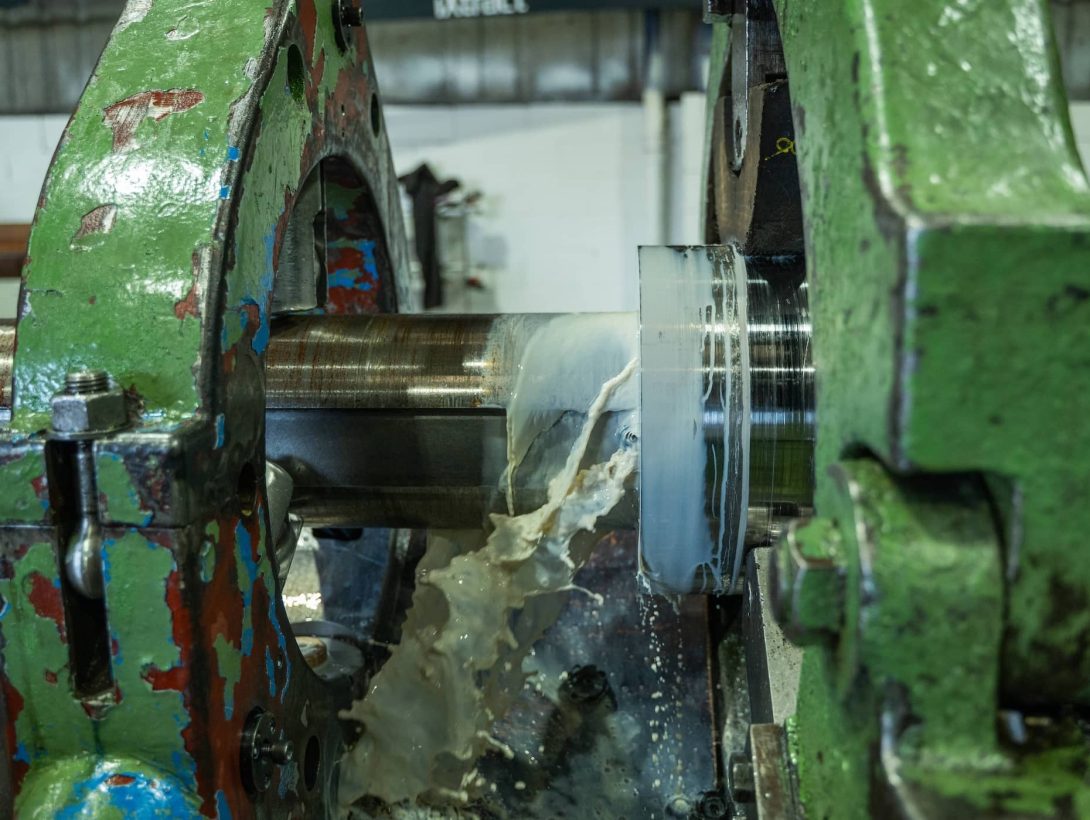
This is achieved through high-pressure coolant delivered directly to the cutting zone, continuous chip evacuation away from the cutting edge, and tooling designed to self-guide within the bore.
The coolant system does far more than just cooling. It actively supports the entire process, flushing chips out before they can interfere with the cut and preventing heat from distorting the material or tool. Without this controlled environment, deep hole drilling would not be possible.
Motion and Stability
The relationship between the tool and the workpiece is essential to maintaining accuracy.
In many high-precision setups, both the tool and the workpiece rotate in opposite directions. This counterrotation stabilises the cut, helping to minimise deviation and maintain concentricity over long distances.
It’s a detail that can be overlooked, but it plays a meaningful role in why deep-hole drilling services can achieve consistent, repeatable results.
Core Deep Hole Drilling Methods
There isn’t a single way to approach deep hole drilling. The method used depends heavily on diameter, material, tolerance requirements and production volume.
Gun Drilling
Gun drilling is typically used for smaller diameter holes where accuracy is critical.
The tool features a single cutting edge and an internal coolant channel. As the drill advances, coolant is forced through the tool to the cutting tip, while chips are carried back along an external groove.
What sets gun drilling apart is its ability to maintain exceptional straightness and surface finish. It is often the preferred choice for precision hole-drilling applications where deviation is unacceptable. In more specialised use cases, such as gun barrel drilling and gun bore drilling, this level of control becomes essential over extended lengths.
BTA Drilling
BTA (Boring and Trepanning Association) drilling is more commonly used for larger-diameter holes and higher-production environments.
Unlike gun drilling, coolant flows around the outside of the drill head, while chips are evacuated through the centre of the tool. This reversal of flow allows for higher feed rates and improved efficiency.
In practice, BTA drilling strikes a balance between accuracy and productivity, making it well-suited to industrial-scale applications and larger deep-hole drilling services.
Ejector Drilling
Ejector drilling sits somewhere between the two.
It uses a double-tube system to create a controlled flow of coolant and chip evacuation without requiring the same level of machine specialisation as BTA. This makes it a more flexible option in certain setups, although it typically does not match the rigidity or precision of dedicated systems.
Machines, Tooling and Process Control
Deep hole drilling is a complete system, not just a tooling choice.
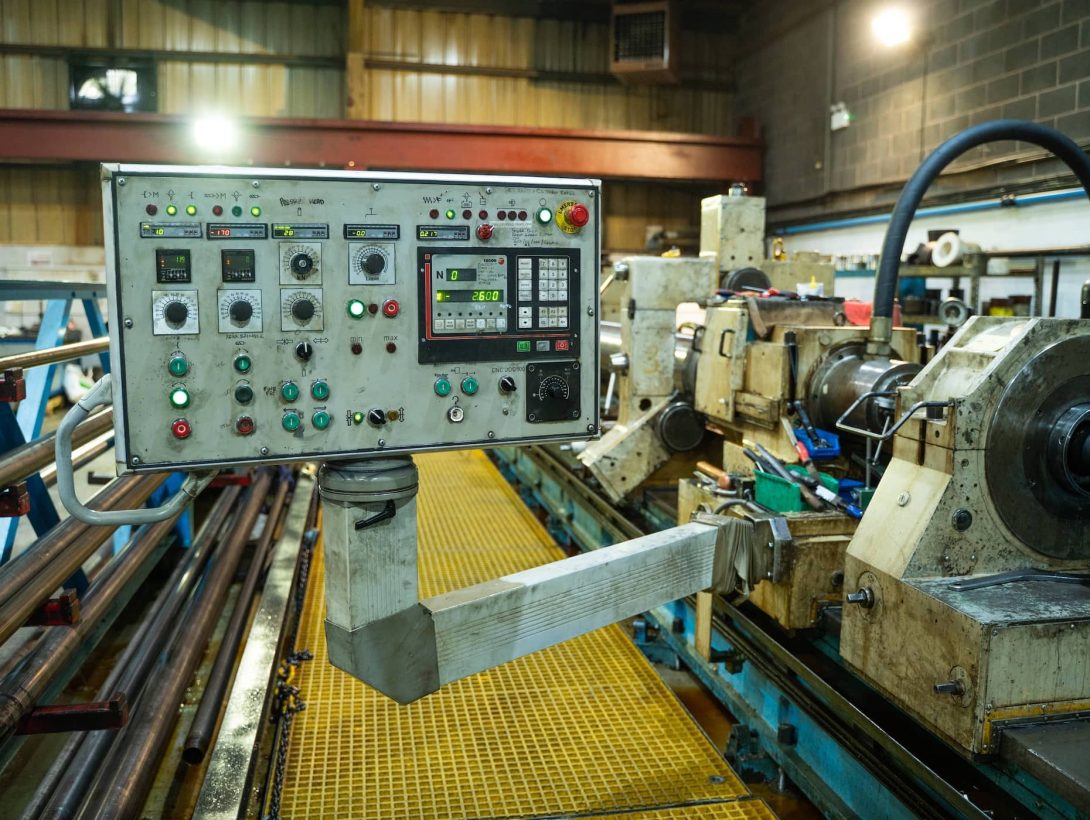
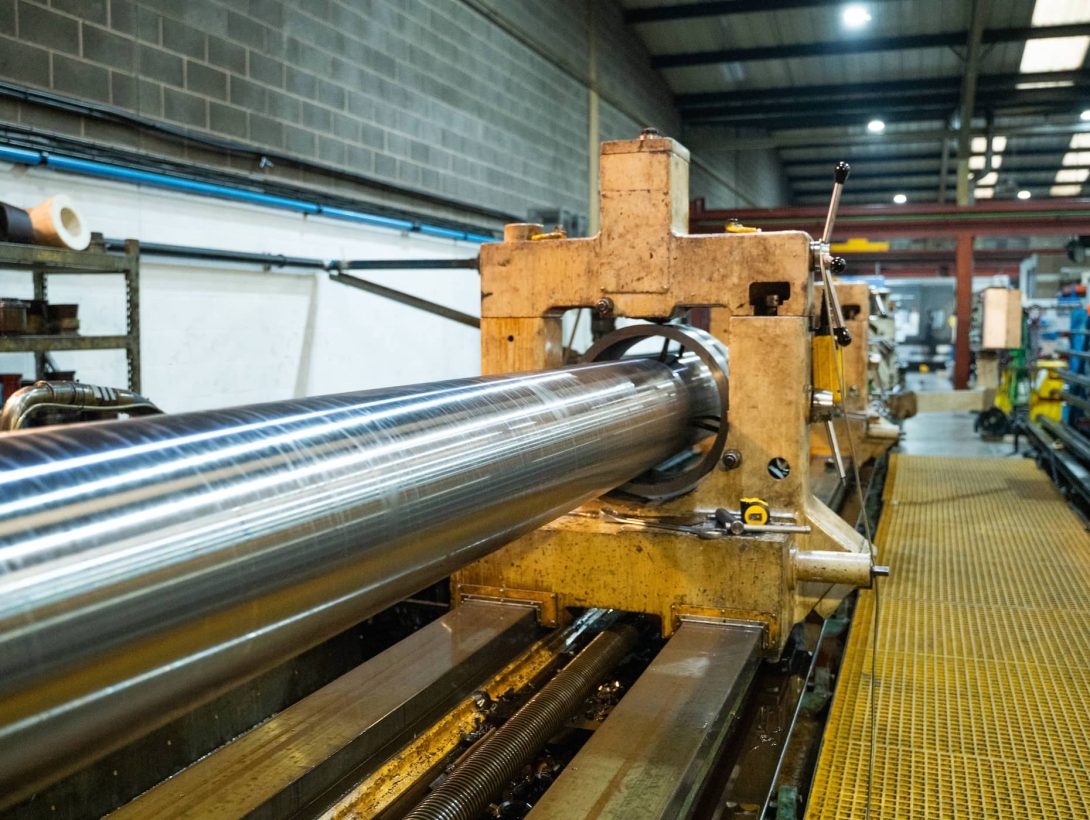
Dedicated machines are designed to provide the rigidity and alignment required to maintain accuracy over long distances. They incorporate high-pressure coolant systems, filtration units and support mechanisms to stabilise both the tool and the workpiece.
Process control becomes paramount at this level. Small variations in pressure, feed rate or alignment can have a substantial impact on the result. This is why specialist manufacturers typically deliver deep hole drilling services with the experience and infrastructure to manage these variables effectively.
Deep Hole Drilling Services and Related Processes
Deep hole drilling is often part of a wider machining process rather than a standalone operation.
In many applications, it is combined with additional processes to achieve the required finish or geometry. For example, a trepanning service may be used to remove large volumes of material efficiently in larger-diameter applications. Rather than cutting the entire bore, trepanning removes a ring of material, reducing both energy consumption and tool wear.
Similarly, CNC honing and honing services are frequently applied after drilling to improve surface finish, roundness and dimensional accuracy. This is particularly important in components where internal surface performance directly affects function, such as hydraulic systems or fuel assemblies.
By integrating deep hole drilling with complementary processes, manufacturers can achieve both precision and efficiency throughout the entire production cycle.
Applications Across Industry
Deep hole drilling is used across a wide range of industries, often in components where performance depends on internal precision rather than external features.
In aerospace, it is used for structural components and landing gear, where strength and alignment are a must. In oil and gas, it supports the production of valves and downhole tools that operate under extreme conditions. Automotive applications include crankshafts and fuel systems, where internal geometry directly affects performance.
Even in medical manufacturing, the process plays a role in producing instruments that require both precision and dependability.
The common thread across all of these applications is the need for long, accurate internal bores that cannot be achieved through conventional machining methods.
Benefits in Practice
The advantages of deep hole drilling become most apparent when consistency is required at scale.
The process enables manufacturers to achieve tight tolerances and high-quality surface finishes without extensive secondary operations. Straightness is maintained throughout the hole length, reducing the risk of rework or service performance issues.
Over time, this level of control translates into improved efficiency and reduced overall cost per component, particularly in production environments where repeatability is critical.
Are There Any Limitations and Considerations?
Despite its advantages, deep hole drilling is not a universal solution.
The process requires specialised equipment, experienced operators and a controlled environment. Primary setup costs are higher than those for conventional drilling, and the margin for error is considerably smaller.
It is also not a process that can be applied casually. Success depends on understanding the interaction between tooling, material and machine dynamics. Without that level of control, the benefits quickly diminish.
Technical Summary
Deep hole drilling is often described as a specialist process, but that undersells it slightly.
It is better understood as a controlled solution to an unstable problem. Once depth increases, the machining environment becomes unpredictable. Deep hole drilling restores that control, allowing manufacturers to produce components that would otherwise be difficult, if not impossible, to achieve reliably.
For businesses relying on internal precision, that level of control is both beneficial and fundamental.
For more information on how we can support your projects, contact our team of specialists here at Mollart Cox.